How to Make or Join an ICE Watch
ICE has stepped into the role of Trump’s secret police within the United States, loyal only to him and willing to carry out whatever abuses of law and human dignity he demands. They have militarized and terrorized our communities by sending armed agents, often masked and not in uniform, to abduct people off the street based on little more than racial profiling.
In times like these we need solidarity against these attempts at intimidation. One of the best ways you can help protect your community is through an ICE/Migra Watch program. In Johnson County, Escucha Mi Voz (EMV) is a leading immigrant rights organization working to protect our neighbors — and a key partner in local ICE Watch efforts. This guide covers what ICE Watch is, how to prepare and stay safe, how to document and respond to ICE activity, and how to build a community defense network.
Note
Looking for a quick-reference checklist to use in the field? See our What To Do When You See ICE page.
Johnson County, IA ICE Hotline
Escucha Mi Voz (EMV) runs an ICE reporting hotline for the area in and around Johnson County. Multiple numbers are available, so if one number doesn’t connect when called, try the other.
Info
Call (319) 382-5203 or (515) 729-6482
Table of Contents
What Is ICE/Migra Watch?
ICE or Migra Watch is a community tactic to document immigration enforcement activity in our neighborhoods.
- ICE Watch is NOT about interfering. It is a strictly non-violent approach.
- ICE Watch is about community. It’s not an individual activity — it’s an organizing tool to keep each other safe.
Why We Focus on Documentation & Response
- It gets support to our neighbors in crisis. When someone is being targeted, documented information helps connect them with legal aid and community support.
- We are learning about this new era of ICE enforcement. Documenting activity helps us understand ICE tactics and identify when their actions may run afoul of the law.
- We are all safer when we stick together. Community presence and solidarity are powerful tools against intimidation.
The Three Goals
- Document: Record what ICE is doing in our neighborhoods, build understanding of their tactics, and capture any activity that might violate the law.
- Support: Assist community members who are being targeted.
- De-escalate: Use nonviolent tactics to diminish the potential for violence from law enforcement.
What’s New in This Moment
Deportation raids are not new, but the current scale and severity require a new response.
- Large shows of armed force with multiple agencies, meant to intimidate
- Sweeping up anyone in the area of an immigration operation, not just the stated target
- Targeting of previously “sensitive” areas like schools, churches, courts, and hospitals
- Aggressive surveillance, arrest, and prosecution of non-violent protesters
- Immigrants and other marginalized groups are caught in the crosshairs of a dangerous escalation of authoritarianism
Identifying ICE Agents
- Appearance
- Vehicles
- Other Agencies
What do they wear?
Look for agents in tactical gear, fatigues, jeans, khakis, or cargo pants. They are not uniformed municipal officers. You may see vests that say POLICE ICE, POLICE HSI, or ERO, but they may wear jackets that just say POLICE. Increasingly, agents wear no identifying markers at all.
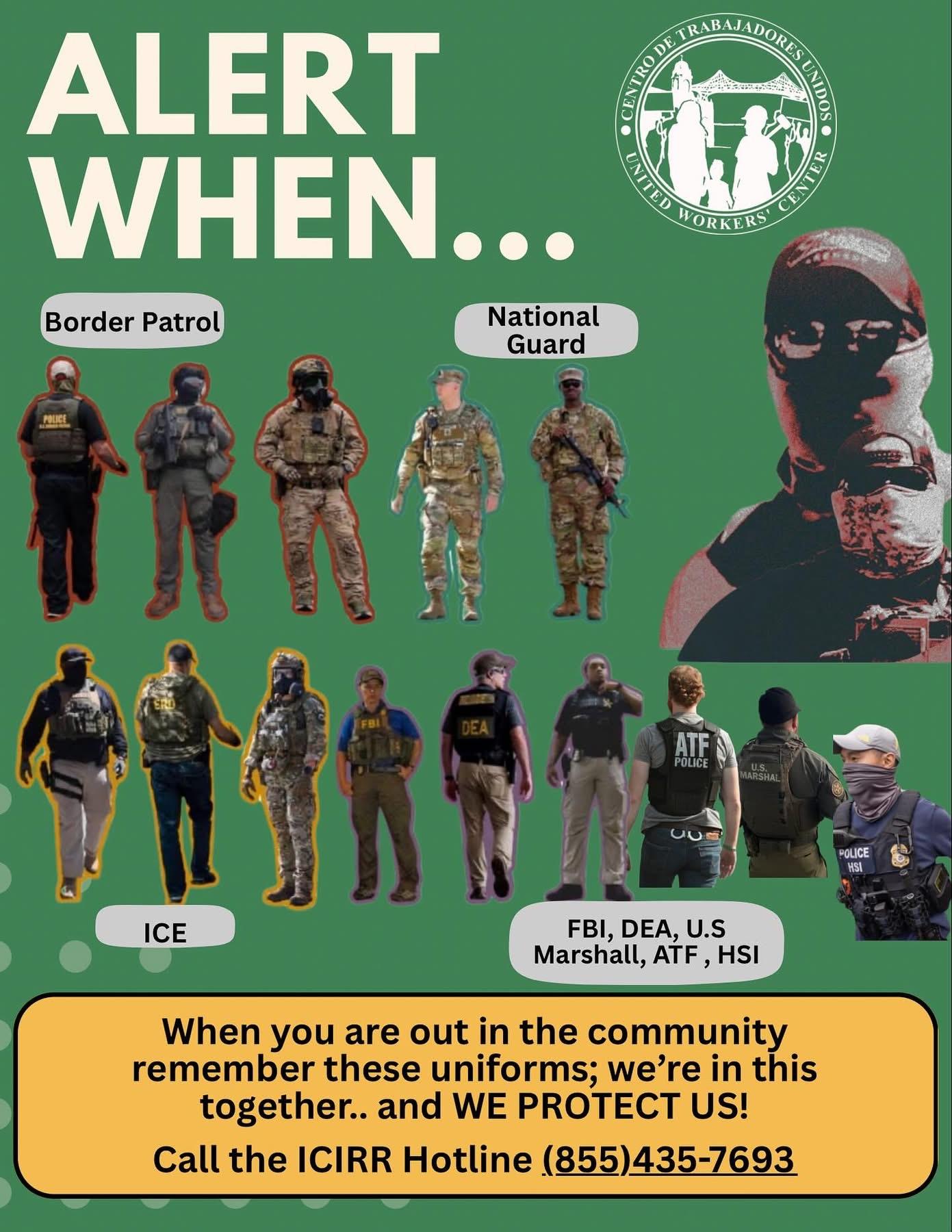
How many agents are typically on the scene?
Anywhere from two to six agents for local operations targeting individuals in residential neighborhoods.
Vehicles to look for
Unmarked cars with dark tint and no plates are common. Frequently seen models include Ford Explorer, Chevy Tahoe, Dodge Charger, Ford Expedition, Chevy Suburban, and others. Agents may also drive minivans or SUVs with government plates, but increasingly use civilian plates.



Who else might you see?
DHS is allowing certain law enforcement components from the Department of Justice — including agencies like the FBI, DEA, U.S. Marshals, and ATF — to carry out the functions of an immigration officer. For more on the role of local law enforcement, see the 287(g) section below.
Preparing for ICE Watch
Phone Security
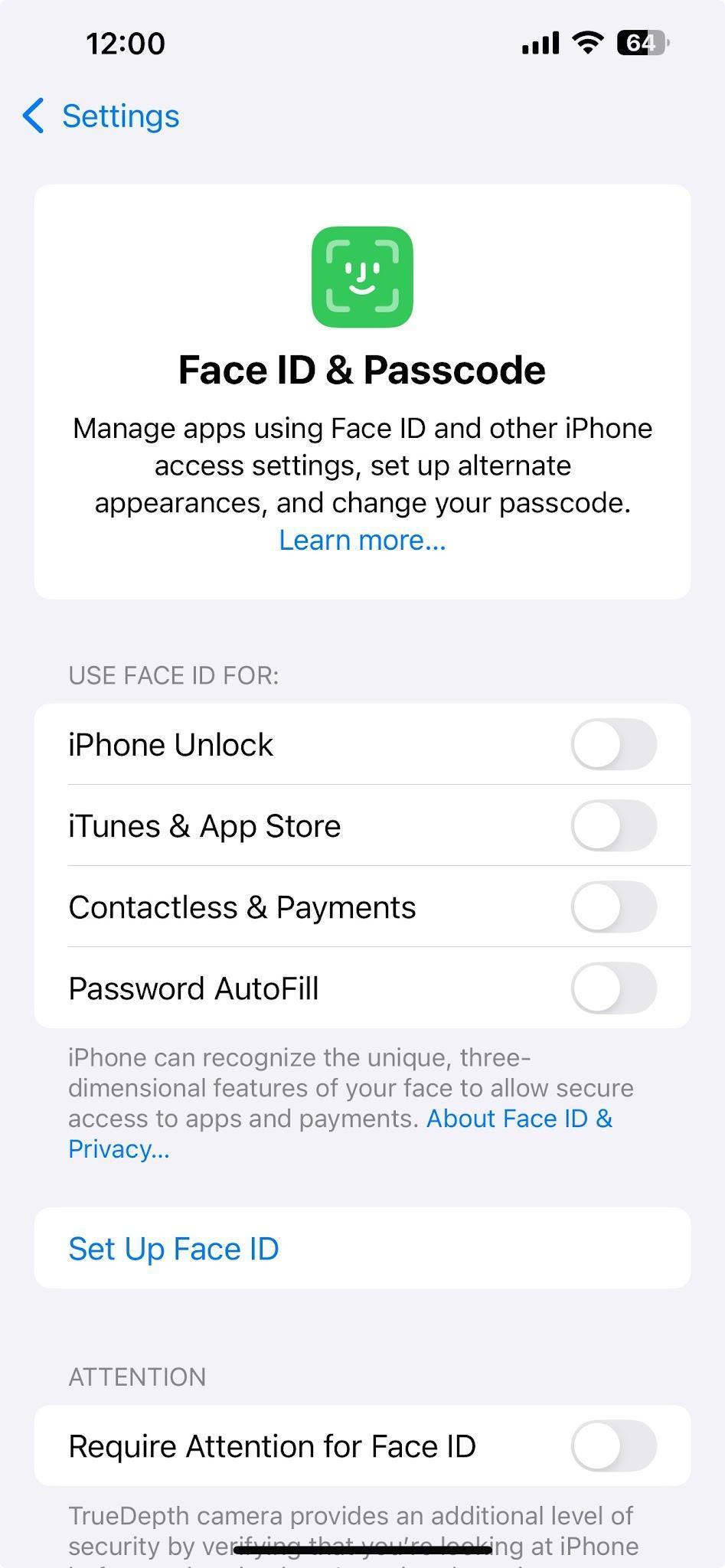
Turn off biometric unlocking before going out for ICE Watch. If your phone is confiscated, law enforcement cannot compel you to reveal a passcode, but they may be able to use your face or fingerprint to unlock your device.
- iPhone
- Android
Go to Settings > Face ID & Passcode (or Touch ID & Passcode), enter your passcode, and toggle off all “Use Face ID For” settings.
Open Settings > Security & Privacy > Face & Fingerprint Unlock (or Face recognition) and toggle off “Unlock with biometrics.”
Supplies Checklist
Always bring:
- Video camera or phone camera
- State or government-issued ID
Helpful to have:
- Whistles or noisemakers (for community alert signals)
- Neighborhood map
- Flashlight (phone is fine)
- Know Your Rights cards
- Extra battery pack or phone charger
- Flyers and tape
NEVER bring (think of it like going through airport security):
- Weapons of any kind
- Illegal or non-prescription drugs
- Open containers of alcohol or anything else that is illegal to transport
Safety & Security Checklist
- Have an emergency contact and share important information with them
- Review de-escalation tactics (see below)
- Review your rights via Know Your Rights/Know Your Risks resources
- Clear enough memory on your phone to have storage space for recording
- Keep your phone charged and bring extra battery packs if possible
- Use encrypted communication (e.g., Signal)
On the Scene
If You See ICE: The SALUTE Framework
If you’re the first to see something, use the SALUTE acronym to gather and report information:
- S — Size/Strength: How many agents are present? Example: “I count 4 to 6 agents.”
- A — Actions/Activities: What are they doing? Example: “They’re surrounding an apartment entrance.”
- L — Location: Where exactly? Cross streets and any additional detail. Example: “Corner of Burlington and Gilbert in downtown Iowa City.”
- U — Uniform: How are they dressed? Any identifying markers? Example: “Tactical gear with vests that say HSI.”
- T — Time & Date: When is this happening? Time is critical. Example: “Wednesday, June 10th at 2:06 p.m.”
- E — Equipment & Weapons: What equipment do you see? Include vehicles. Example: “Body armor, sidearms, two unmarked black SUVs.”
If you can’t get all the details, that’s OK — report what you can and prioritize speed.
What To Do After SALUTE
If you have a neighborhood ICE Watch group: Send all your SALUTE information to your group. Ask others to help confirm the sighting, get people to the scene, and provide guidance to targeted neighbors. Then, report to the Escucha Mi Voz ICE hotline.
If you don’t have an ICE Watch group: Report directly to the Escucha Mi Voz ICE hotline and provide all SALUTE info.
Outside Johnson County? Search online for an immigration or ICE hotline in your area — new ones are being established regularly.
Info
If you know someone being held in an ICE detention center: Call the National Immigrant Justice Center (NIJC) at (312) 583-9721.
ICE Watch Roles
If possible, work in groups of three. Communication is key.
- Recorder
- Supporter
- Monitor
Priority 1 — Recorder
- Record the activity all the way through, as long as it is safe to do so
- Narrate what you’re seeing
- Do NOT focus video on the person or people being detained
Priority 2 — Supporter
- Share vital Know Your Rights information with the person being targeted
- If someone is being actively detained, ask for their name, date of birth, and an emergency contact
- Do NOT engage with ICE agents or interfere, even if you witness violence
Priority 3 — Monitor
- Take note of everything that is happening around you
- Help direct people to engage safely
- Do NOT interfere in any way
Documenting ICE Activity
Documenting public ICE and Border Patrol activity is legal and protected by the Constitution. Make sure to also consult any local and state laws, as some states require specific distances from the activity.
Why documenting matters:
- Protects you by creating a record of your own actions and behavior during any encounter with ICE.
- Helps your neighbors by capturing what occurs during a detention, providing important information for lawyers.
- Holds ICE accountable when their actions are reviewed by the courts.
Best practices for recording:
- Create a video, NOT a livestream. Livestreams can expose people’s identities and locations in real time.
- Narrate what you see, including your own compliance. Example: “We are in a public space. I have a legal right to film your enforcement actions.”
- Hold your phone in landscape (horizontal) to capture more detail.
- Stay at a safe distance — at least 10 feet from agents (some states require 25 feet or more). Position yourself so you have room to walk away.
- Document license plate numbers and badge/star numbers of agents, or note the lack of identifying numbers.
- Focus on agents and their actions. Avoid recording detainees, bystanders, or observers, as this can endanger them.
- Before you stop recording, narrate the date, time, and location of the event.
- Always have someone with you.
- The passenger should be the one recording in a car — begin as soon as you see a verified vehicle.
- On a bike, try to stop as close to the sidewalk as you can. Put your hands up when it’s safe to do so.
- If agents approach your car, lock your doors and roll up windows. Once safely parked, put your hands up away from the steering wheel.
- Narrate your actions aloud. Example: “I am on a public road. I have a legal right to use this public road. I am not preventing you from using this public road.”
If officers tell you to move back:
Take one or two steps back, saying out loud that you are complying. Turn your camera toward the ground to document yourself moving back. You have the right to observe as long as you are not interfering with law enforcement activity.
Example script: “I’m cooperating. I’m taking a step back. I’m not interfering. I’m just exercising my legal right to observe.”
If someone is being detained, try to ask: “Please tell me your name and date of birth. Is there a family member’s phone number so we can get help to you?”
Preserving Your Media
- Save the original file in a safe place. Never delete the original or change the filename.
- If you need to edit, work from a copy.
- Create redundancy. Send the video to a trusted contact or secure cloud storage as soon as possible. Back it up to a secure external hard drive. Consider: if your phone is confiscated, do you have a way to remotely retrieve the video?
- Be aware that cellphones often capture GPS coordinates in video metadata — if you share footage, this could be traced back to you.
- If you choose to stream, do so only to a trusted, private audience such as an attorney or legal observers — not publicly.
Staying Safe & De-escalation
- Keep your hands up and empty — make repeated, calm statements about your rights and non-aggressive intentions
- No name calling — no aggressive verbal or physical behavior
- Do not interfere — ICE Watch is not a tactic for interfering with ICE activity, even if you witness violence toward a neighbor
De-escalation is a nonviolent response to conflict that aims to calm a tense situation. Consider yourself, the individuals around you, and the person being targeted.
Three main components:
- Act: Remain calm, maintain distance, and walk away when necessary.
- Communicate: Think about your language, tone, and volume. Set clear boundaries.
- Monitor: Observe what’s going on around you. Respect personal space.
Whistles as a Community Alert System
Whistles can serve as a fast, low-tech alert tool when ICE is spotted in the community. They’re loud, recognizable, and impossible to ignore.
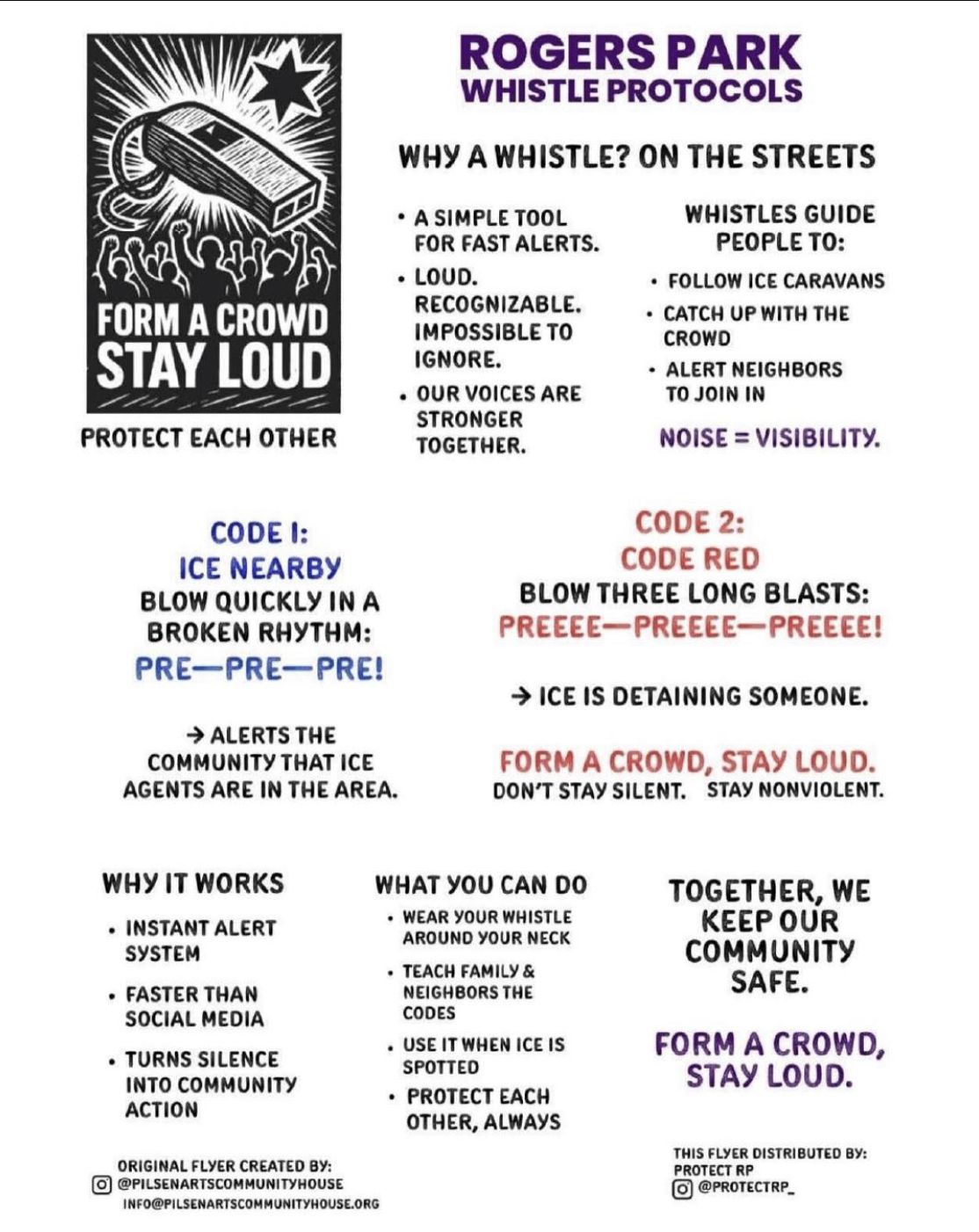
Code 1 — ICE Nearby: Blow quickly in a broken rhythm (short blasts). This alerts the community that ICE agents are in the area.
Code 2 — Code Red: Blow three long blasts. This signals that ICE is actively detaining someone. Form a crowd, stay loud, and stay nonviolent.
Tips for using whistles:
- Wear your whistle around your neck
- Teach family and neighbors the codes
- Use it when ICE is spotted — don’t stay silent
Building a Community Defense Group
Getting Started
- Connect with existing organizations. In Johnson County, Escucha Mi Voz is already doing this work and can help you get plugged in. Reach out to them before starting from scratch.
- Get trained. Make sure you understand how to identify ICE and practice what you’d do if you see them in your community.
- Find some friends. This can be as small as a couple of neighbors who are concerned. Start talking about what worries you and how you’d like to be there for each other.
- Help your friends get trained. Many networks struggle with false alarms that overwhelm the group, so making sure everyone has ICE Watch training is a good place to start.
- Designate verifiers. Choose a few people to serve as the first point of contact for possible sightings. Good verifiers are people who work from home or are frequently around the community, have flexible schedules, are mobile, and can stay calm in a difficult situation.
Setting Up Communications
- Download an encrypted messaging app (like Signal).
- Test the system. When someone has a possible ICE sighting, verifiers/administrators receive the message first. They’ll ask for SALUTE information and photos to help confirm the sighting.
- Establish protocols. What happens after a sighting is confirmed? Can group members join you on scene? Is there a hotline to call? Decide these things in advance.
- Plan for speed. Experience shows you may have only a 5-7 minute window from the moment of contact until agents are gone. Groups that rely on larger timeframes may consistently arrive too late.
- Meet (and eat) regularly. Building community takes time and shared experience.
Organizational Structure
A hub-and-spoke model works well for community defense:
- Core leads handle decision-making and coordination
- Training spoke: Know Your Rights education, ICE Watch & community defense training
- Communications spoke: Email updates, social media, internal messaging
- Rapid Response spoke: Verifiers, community patrols, response protocols
- Community Building spoke: Events, assemblies, mutual aid, community care
Building a Resilient Community
- Be welcoming. Meetings should involve food, time for reflection, and a democratic spirit.
- Be creative. Seek creative ways to engage people. Everyone can do something.
- Be flexible (but clear on the goal). Not every day involves an ICE response — sometimes the work is mutual aid, a book club, or a movie night. But the core mission remains clear.
- Be courageous. Know how much risk you can tolerate and be willing to test that. We find courage in each other.
ICE’s 287(g) Program
As of February 2026, Johnson County law enforcement (Sheriff’s Office, Iowa City PD) does not have a 287(g) agreement with ICE. This means local Johnson County officers should not be carrying out immigration enforcement functions. If you observe local officers participating in an ICE operation, that is worth documenting and reporting.
However, the Iowa Department of Public Safety signed a statewide 287(g) Task Force Model agreement with ICE in March 2025. This authorizes a small task force of Iowa State Patrol agents to perform immigration enforcement duties — including arrests and detainers — anywhere in the state, under ICE supervision. This means 287(g)-authorized state officers could operate in Johnson County even though local agencies have not signed their own agreements.
Check whether other jurisdictions have a 287(g) agreement.
The 287(g) program allows local law enforcement agencies to partner with ICE in various ways:
- Jail Enforcement Model (JEM): Targets people already in custody. Local officers can question people about their immigration status and hold non-citizens for up to 48 hours under ICE’s request.
- Warrant Service Officer (WSO): ICE trains and authorizes local officers to serve and execute administrative warrants in their agency’s jail.
- Task Force Model (TFM): Allows local law enforcement to enforce limited immigration authority with ICE oversight during routine duties like traffic stops.
Additional Resources
ICE Watch Resources Linktree
This Linktree has many resources for ICE/Migra Watch volunteers. It also includes directions for how to set up a shortcut directly to it from your smartphone’s home screen, for easy reference on the go.
ICE Watch ResourcesKnow Your Rights
The Immigrant Legal Resource Center provides digital Know Your Rights (Red) cards in multiple languages.
Know Your Rights Cards (ILRC)Escucha Mi Voz
Escucha Mi Voz (Hear My Voice) is a Johnson County immigrant rights organization that strengthens the power of immigrant workers to achieve dignity and justice. They run the local ICE reporting hotline and are a vital resource for community defense efforts in our area.
Escucha Mi VozLegal & Rights Resources
- ACLU Immigrants’ Rights — Legal resources and information on immigrants’ rights from the American Civil Liberties Union
- National Immigrant Justice Center — What to do if you or a loved one is detained: (312) 583-9721
- National Lawyers Guild — Know Your Rights / Know Your Risks resources for observers and protesters
- CrimethInc. Standing Up to ICE — A comprehensive guide to building community resistance to immigration enforcement
Download the Original Training Guide
This page is adapted from a training presentation by States at the Core, Protect Rogers Park, and Edgeville Community Rapid Response. The original PDF is available for download below.
Download: Documenting and Responding to ICE (PDF)